Context
meaning.love
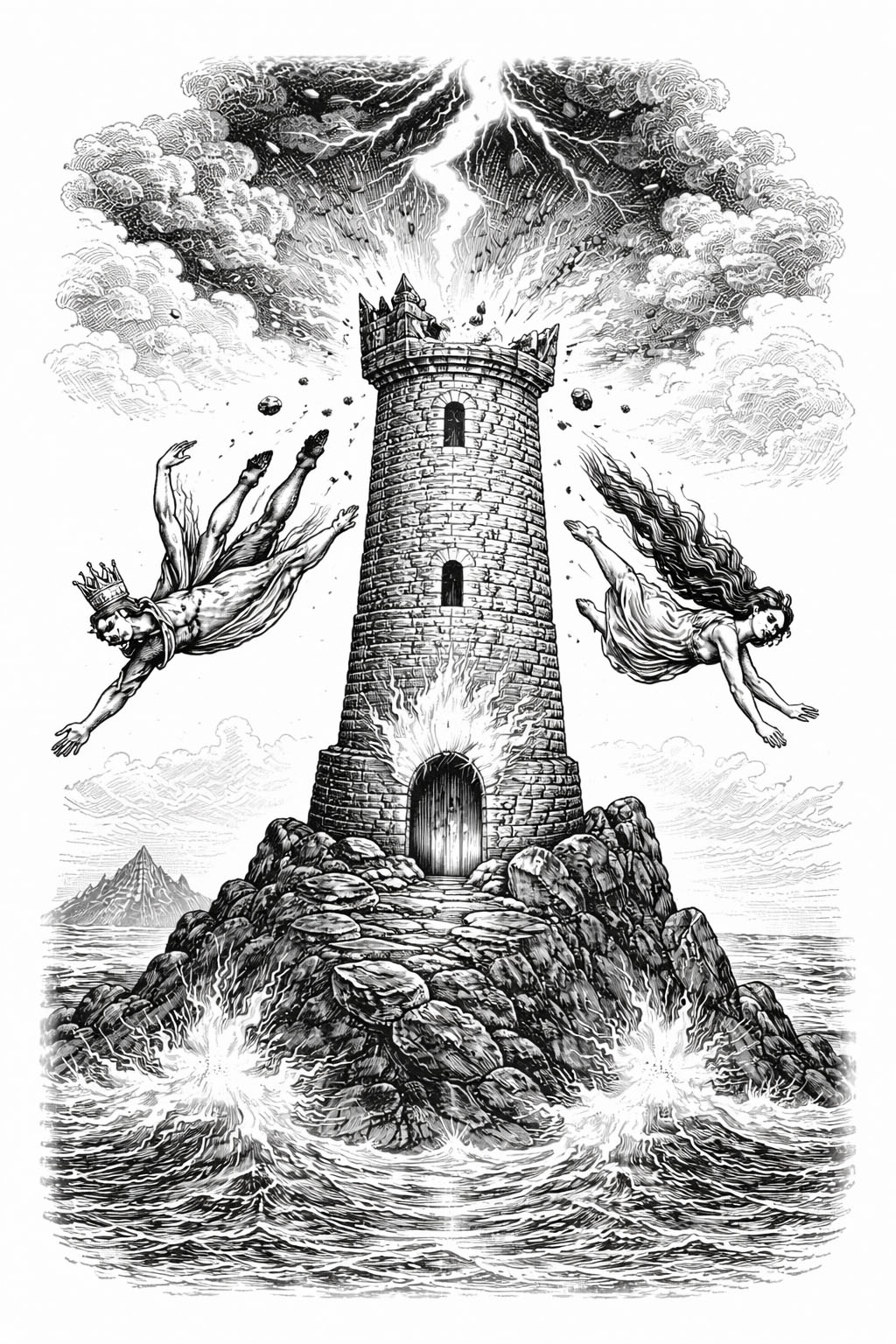
The Tower in a love context describes disruption to established patterns rather than a simple romantic omen. Its core theme is the collapse of structures that were unstable, illusory, or built on avoidance. In readings about relationships it tends to highlight sudden revelations, a breakdown of expectations, or events that force participants to confront realities they had been ignoring. That can appear as an abruptly disclosed betrayal, a harsh argument that removes a veneer of civility, or an internal realization that a partnership no longer matches one’s needs.
Psychologically, the card points to the consequences of living with unexamined assumptions: when foundational beliefs or habits are brittle, pressure reveals the weakness. In love this can mean that compromises maintained through denial, codependency, or fear of change eventually become unsustainable. The Tower’s energy is not primarily about punishment but about exposure and clearing. The disorder it represents creates a space where honesty is no longer avoidable and where pretense falls away, allowing for a reassessment of values and boundaries.
Interpretation should consider whether the emphasis is external shock or internal awakening. For some people the card signals an external event that forces change; for others it is an internal crisis that catalyzes personal growth. Either way, the significant aspect is transformation: relationships that survive such upheaval typically require new foundations built on clearer communication, realistic expectations, and mutual responsibility. Those unable or unwilling to rebuild may find the connection dissolves, which can be experienced as loss but also as an opportunity to realign with more authentic needs.
When working with the Tower in a love reading, focus on identifying which structures are unstable (beliefs, communication patterns, dependency dynamics) and on processes for coping with sudden change—processing emotions, seeking trusted support, and reassessing commitments. Viewed educationally, the card i
meaning.job
In a career context, The Tower points to a phase of sudden, structural disruption that exposes weaknesses in systems, assumptions, or relationships. It highlights situations where long-standing arrangements or narratives about work are overturned—this can mean a rapid organizational change, the collapse of a project, a sudden revelation that alters trust or standing, or the breakdown of processes that were taken for granted. The card is less about specific outcomes and more about the dynamics: instability forced by reality testing illusions, and the stripping away of what is no longer viable.
Interpreting The Tower professionally invites an analytical look at foundations: which procedures, dependencies, or expectations are fragile? It calls attention to blind spots, unaddressed risks, and overly rigid structures that cannot adapt when stressed. The card also reframes disruption as an opening for structural correction: once an untenable arrangement is dismantled, there is an opportunity to redesign workflows, clarify roles, and build more resilient, transparent systems aligned with practical needs rather than comforting narratives.
Psychologically, The Tower emphasizes the importance of clear communication, documentation, and learning from failure rather than denial. In organizational terms, it underscores governance, risk assessment, and the need to confront systemic problems directly. Professional responses aligned with this reading involve assessing vulnerabilities, improving safeguards, and prioritizing long-term stability over short-term appearances. Viewed educationally, The Tower serves as a prompt to examine what in a career or workplace requires fundamental rethinking and to consider how rebuilding might produce a stronger, more authentic structure.
meaning.finance
The Tower, in a financial context, is a symbol of sudden structural disruption rather than a literal prophecy. It commonly represents situations where long-standing assumptions or arrangements about income, assets, debt, or business operations are exposed as unstable and are forced to change quickly. This card points to events or realizations that reveal weaknesses in planning, leverage, or reliance on external supports; examples include abrupt market corrections, unanticipated expenses, contract collapse, regulatory shifts, or breakdowns in a business model. The emphasis is on a break in the existing framework that compels reassessment.
Interpreting the Tower analytically involves identifying where current financial structures rest on brittle foundations: overreliance on a single income source, excessive leverage, inadequate liquidity, informal agreements lacking documentation, or complacent risk management. When the Tower appears as a theme, it draws attention to the potential consequences of those vulnerabilities and to the need for rigorous examination of assumptions and contingency capacity. It also highlights that disruption, while painful, can clear distorted or unsustainable elements and create space to rebuild with greater realism and resilience.
From a practical analytical standpoint, the card suggests prioritizing measures that reduce exposure to sudden shocks: clarify legal and contractual positions, assess and improve cash reserves and liquidity access, review insurance and compliance profiles, and re-evaluate investment diversification and debt structures. It also advocates for transparent record-keeping and stress-testing plans against worst-case scenarios. In organizational contexts, it encourages contingency planning, communication protocols for crises, and revisiting governance or operational bottlenecks that could magnify a disturbance.
The Tower is educational rather than fatalistic: its presence is a prompt to learn from fragility and to take concrete steps to shore up systems. It undersco
meaning.family
The Tower in a family context points to themes of sudden disruption to the established structure or expectations within household relationships. It highlights moments when assumptions, routines, or hidden dynamics are exposed and abruptly overturned—this might take the form of an unexpected argument that reveals deeper resentments, the surfacing of information that changes how people relate, an abrupt change in living arrangements, or a crisis that forces immediate practical choices. The card emphasizes the breakdown of what was thought to be stable rather than gentle evolution.
Interpreting this card analytically involves attending to where rigidity, denial, or unexamined dependencies exist in the family system. The Tower signals that those foundations are vulnerable and that any attempt to patch over problems without addressing root causes will be fragile. It also underscores the potential for necessary clearing: when a structure is dismantled, there is space to reassess values, reconfigure roles, and rebuild on more transparent, honest terms.
For practical consideration, focus first on immediate safety and clear communication: ensure that decisions made in haste are documented and that emotional responses are contained enough to allow later reflection. Seek objective help when the disruption involves legal, financial, or psychological complexity—mediators, counselors, or legal advisors can provide frameworks for recovery. In the longer term, use the upheaval as information: analyze which patterns contributed to the breakdown, what boundaries need strengthening or loosening, and how responsibilities and expectations might be redefined to support healthier interactions. The Tower is less about punishment and more about the opportunity to replace brittle structures with ones grounded in truth and mutual accountability.
meaning.mind
The Tower, when read for psychological state, signals an experience of sudden upheaval in inner structures: long-held beliefs, defensive patterns, or habitual ways of organizing experience are exposed as unstable and may collapse. This can appear as a shock to the system—intense anxiety, disorientation, a sense of exposure or raw vulnerability—accompanied by a forced confrontation with truths that were previously avoided or unconscious. Cognitive dissonance, abrupt reappraisal of identity, and the breakdown of coping strategies are common features.
Psychologically this card points to moments when adaptive frameworks must be dismantled to allow for more accurate, though initially painful, models of reality. The immediate phase is often chaotic and destabilizing; emotional regulation, containment, and support become important as the person processes the loss of old certainties. With time and integration, the rupture can permit cognitive restructuring, the formation of more resilient boundaries, and a clearer alignment between perception and fact. In some cases the experience mirrors acute stress or trauma and may benefit from professional attention to aid recovery and meaning-making rather than being left to unfold unattended.
meaning.soul
The Tower, when read for a person's emotional state, describes a process of sudden destabilization rather than a fixed personality trait. It is associated with experiences of shock, rupture, or the abrupt dismantling of previously held certainties—beliefs, defenses, or routines that once provided emotional structure. This card points to feelings that can be intense and disorienting: alarm, vulnerability, grief, or a sense of being unmoored when the familiar no longer holds.
Psychologically, the Tower highlights the confrontation with truths or contradictions that were suppressed or ignored. That confrontation can feel violent because it forces rapid reassessment: coping strategies that were adaptive may prove inadequate, and illusions about safety or control are stripped away. At the same time, the card does not merely mean loss; it names a clearing process. By breaking apart rigid patterns, it creates space for more honest appraisal and for building emotional frameworks grounded in a clearer reality.
In terms of managing or working with this state, the emphasis is on containment, integration and gradual reconstruction. Grounding practices, seeking support, reflective work or therapy can help process the shock and examine the underlying structures that collapsed. Over time, the emotional landscape indicated by the Tower can lead to a reconfiguration that permits greater authenticity and resilience, provided the upheaval is met with attention and care rather than avoidance.