Context
meaning.love
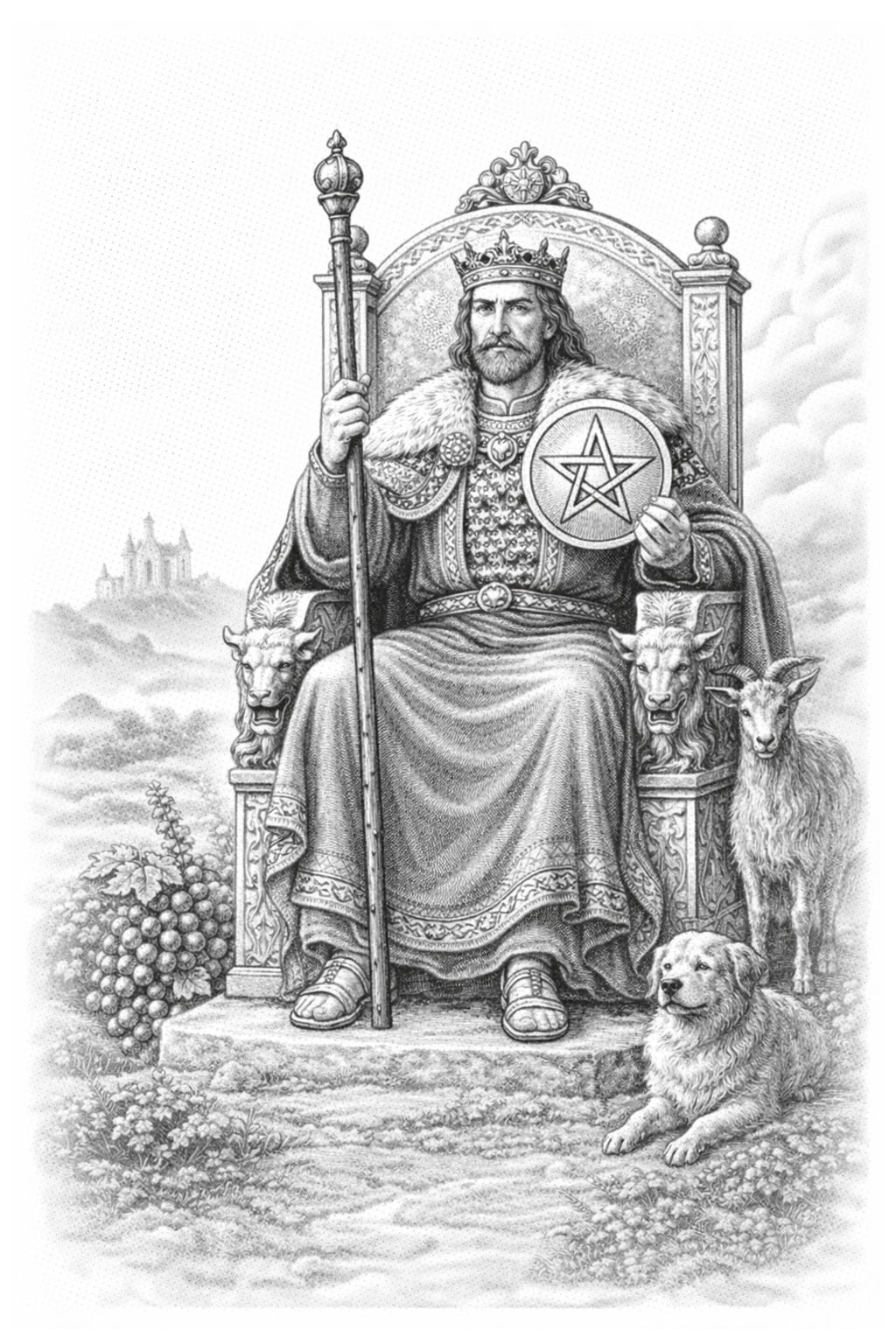
The King of Pentacles in a love context points to themes of stability, responsibility, and a practical approach to relationships. He embodies a grounded, steady presence that values security, material comfort, and reliable commitment; emotionally, this can show up as consistent care, tangible support, and a preference for building a predictable life together. As a relational archetype he emphasizes long-term planning, patience, and the ability to provide practical solutions to domestic or financial issues, often prioritizing actions over dramatic expressions of feeling.
At the same time, the same qualities can tilt toward reserve or rigidity. A focus on material indicators of love, control of resources, or reluctance to engage with vulnerability can limit spontaneity and emotional intimacy. There can be a tendency to equate affection with provision, to protect the relationship through caution rather than openness, or to become possessive in the name of security. Workaholic patterns and an emphasis on status or comfort may also reduce time available for nurturing softer emotional needs.
In interpreting this card for love matters, consider how stability and responsibility function within the relationship and whether they support mutual growth or constrain emotional expression. Explore questions about shared values around money, domestic roles, and long-term goals, and whether practical care is balanced with warmth and reciprocal emotional availability. For someone seeking a partner, the King of Pentacles encourages clarity about the importance of reliability and the capacity to create a secure environment; for those in relationships, it highlights the value of aligning practical arrangements with affectionate presence and ensuring that security does not replace intimacy.
meaning.job
The King of Pentacles in a career context represents the qualities of practical leadership, financial acumen, and steady authority. As an archetype it embodies someone who builds and maintains systems that produce reliable results: careful planning, disciplined execution, respect for expertise, and an emphasis on long-term sustainability rather than quick wins. In a workplace reading this energy often points to established competence, professional reputation, and the ability to manage resources—people, budgets, time—with skill and restraint.
This figure can appear as a description of the querent, their manager, or the desired professional environment. When associated with the querent, it suggests an orientation toward responsibility, methodical work habits, and a focus on concrete outcomes. When it describes another person or the organizational climate, it signals a leadership style that values stability, established procedures, clear expectations, and measurable performance. It also frequently correlates with positions where fiscal responsibility and risk management are central: finance, operations, senior management, entrepreneurship centered on sustainable growth, or trades and crafts where quality and reliability are prized.
Viewed analytically, the card highlights strengths and potential limits. Strengths include consistency, strategic resource allocation, credibility, and the capacity to mentor or institutionalize knowledge. Potential blind spots are an excessive conservatism, resistance to innovation, overemphasis on material metrics at the expense of creativity or morale, and a tendency to centralize control. Practically, the King of Pentacles points toward building robust systems, clarifying financial and performance parameters, and cultivating professional courtesy and accountability. For those aiming to embody its positive aspects, attention to interpersonal flexibility, openness to selective innovation, and conscious delegation can help balance long-term stability with responsiveness to change.
meaning.finance
The Pentacles King (King of Pentacles) in a financial context represents practical mastery of material resources, steady long-term planning, and disciplined stewardship. It symbolizes an approach to money that emphasizes reliability, conservative investment, asset-building and protection, and competent management of business affairs. Where this energy is present, decisions tend to be methodical rather than impulsive, priorities are placed on sustainability, and success is measured by stability, solvency and tangible returns rather than short-term thrills.
Interpretation in financial matters includes seeing structures and systems for preserving capital: diversified portfolios aligned with realistic goals, careful budgeting, attention to property and physical assets, and professional oversight such as trusted accountants or financial advisors. It can also point to the influence of a financially experienced person—an investor, mentor, or executive—whose temperament is pragmatic and risk-aware. At the same time, the card invites scrutiny for potential downsides: excessive conservatism that causes missed opportunities, overattachment to material status, or a tendency to prioritize control over adaptability. For practical use, consider whether current strategies emphasize long-term durability and clear accountability, whether delegation and expert guidance are being used effectively, and whether a balance is being struck between security and appropriate risk for growth.
meaning.family
In a family context, the King of Pentacles represents stability, practical responsibility and the management of material and domestic resources. This figure embodies a steady provider or caretaker who places value on security, routine and the long-term well‑being of household members. Interpreting this card often points to pragmatic decision‑making around finances, property and daily structures: budgeting, managing assets, maintaining the home and ensuring that practical needs are met reliably. It also highlights a tendency to protect family traditions, plan for future generations and build a tangible legacy.
On the interpersonal level, the King of Pentacles characterizes someone who is dependable, disciplined and often respected for their competence; their support is expressed through tangible actions rather than overt emotional display. However, that same emphasis on control and material order can have downsides: a tendency toward rigidity, overprotectiveness, equating care with provision, or becoming distant when emotional flexibility is required. Power dynamics may surface if one family member assumes the role of manager or decision‑maker without collaborative input from others.
For interpretation, consider where practical matters and emotional needs intersect: who is taking responsibility, how resources are allocated, and whether stability is being achieved at the cost of warmth or autonomy. The card invites consideration of long‑term planning, clear stewardship and the balance between providing security and allowing emotional expression within the family system.
meaning.mind
The Pentacles King as a psychological state describes a person who operates from a foundation of practicality, self-control and competence. Emotionally steadied rather than dramatic, this stance prioritizes security, reliability and the management of resources—internal and external. Cognitively it favors planning, delayed gratification and an ability to translate abstract goals into concrete steps; affective life is often regulated through routines, habits and tangible measures of success. Self-esteem is tied to capability, stewardship and the visible results of effort.
In a more adaptive expression this state yields resilience, clear boundaries, consistent caretaking and a capacity to support others without being overwhelmed. It also supports realistic assessment of risk and the psychological capacity to endure slow progress.
Shadow aspects include rigidity, over-identification with roles or possessions, emotional reserve that can feel distant to others, and a reluctance to accept change that undermines perceived stability. When under stress the Pentacles King can become controlling, work-focused to the detriment of intimacy, or defensive about loss of status.
Clinically or therapeutically, useful points of attention are the balance between competence and vulnerability, cultivating emotional expressiveness alongside practical mastery, and noticing whether safety-seeking strategies limit spontaneity or meaningful connection. The archetype highlights strengths in organization and stewardship while also signaling where flexibility and inner warmth may need strengthening.
meaning.soul
As a depiction of an inner state, the King of Pentacles represents a settled, practical, and resourceful mindset. It characterizes someone who thinks in terms of stability, long-term planning, and tangible results. Emotionally, this state is calm and grounded; feelings are expressed through reliable actions rather than dramatic displays. Cognitively, it emphasizes clear priorities, disciplined routines, and a capacity to manage complex, everyday responsibilities without becoming overwhelmed.
This card also points to confidence that is earned through experience, a measured self-assurance rooted in competence and sensible judgment. There is an orientation toward provision and protection: concern for safety, material comfort, and the welfare of dependents shapes decisions and responses. Creative energy, when present, is channeled into practical projects or sustainable structures rather than experimentation for its own sake.
Potential shadow aspects include a tendency toward rigidity, overcaution, or defining self-worth by external success and possessions. Emotional reserve can become emotional distance; generosity can harden into possessiveness. Conversely, pride in competence can mask reluctance to ask for help or to admit vulnerability.
For development, the King of Pentacles as a mental state suggests strengthening deliberative skills and maintaining disciplined habits while consciously cultivating flexibility and emotional openness. Balancing practical competence with receptivity to change and interpersonal warmth can transform a stable, controlled inner life into one that is both robust and humane.