Context
meaning.love
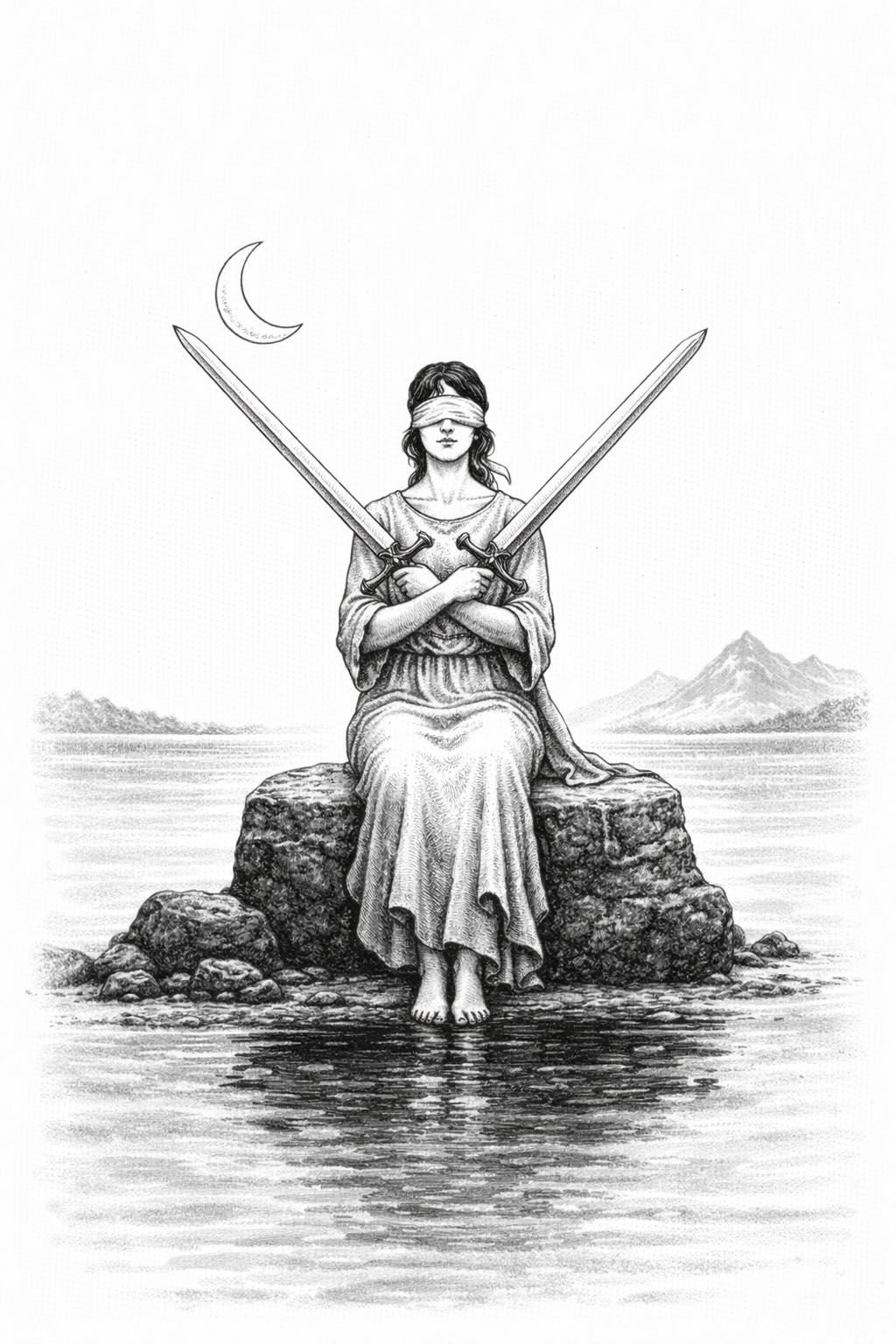
In a love reading, the Two of Swords describes a situation of stalemate, indecision, or avoidance rather than emotional clarity. The image of a blindfolded figure holding two crossed swords symbolizes a mental stalemate: partners or an individual may be weighing options strictly intellectually, shutting out feelings or important information in order to preserve a fragile balance. This can show up as refusal to choose, postponing difficult conversations, emotional numbness, or deliberately ignoring conflicting needs to avoid conflict.
Interpreting the card in relational terms involves distinguishing the protective quality of the pause from the harm of prolonged avoidance. The pause can be neutral or even adaptive when it buys time to gather facts or cool strong emotions. It becomes problematic if it hardens into suppression, creates resentment, or prevents necessary decisions about boundaries, commitment, or next steps. Useful lines of inquiry include clarifying what information is being excluded, which values and needs are being weighed, and whether the present balance protects both parties or only delays consequences. Approaches that tend to move the situation forward involve creating conditions for honest exchange, aligning cognitive appraisal with felt experience, and setting a clear timeframe for decision-making or mediation. In short, the Two of Swords points to the need to replace stalemate with informed, emotionally aware choice rather than instant resolution or enforced certainty.
meaning.job
The Two of Swords in a career context describes a situation of impasse where choices, information, or emotions are deliberately held at bay. Symbolically it points to a moment when opposing options or demands are balanced against each other and a decision is postponed. That suspension can be a strategy to avoid risk or conflict, but it also can constrain progress if it becomes habitual.
At the level of workplace dynamics, this card often signals conflict between logic and feeling, or between two viable paths that have comparable merits and drawbacks. It can reflect an internal stalemate—difficulty prioritizing, fear of negative consequences, or uncertainty about unknown factors—or an external standoff, such as negotiations, competing proposals, or split opinions among colleagues or stakeholders. The “blindfold” motif commonly associated with this card suggests incomplete information or an unwillingness to look at uncomfortable facts.
Analytically, the Two of Swords highlights the need to clarify criteria for making the decision rather than relying on avoidance. Useful approaches include identifying which uncertainties are resolvable through research or consultation, making explicit the values and objectives that matter most, and assessing the short- and long-term trade-offs of each option. It also points to the potential value of a neutral perspective—mediators, mentors, or peers can surface biases and reveal angles that are being overlooked.
The card cautions that a temporary pause can be productive if used to gather necessary information and to regain mental equilibrium; however, indefinite stalemate can lead to stagnation, missed opportunities, or strained relationships. Attention to communication style and boundary-setting matters: labeling issues clearly and expressing what is negotiable versus non-negotiable helps move a stalemate toward resolution.
In practical terms, the Two of Swords invites deliberate, structured decision-making: make explicit what is unknown, prioritize information-gathering, test
meaning.finance
In a financial context, the Two of Swords represents a stalemate between competing priorities, an impasse created by uncertainty or incomplete information. Decision-making is often stalled because the risks and benefits of available options are not fully known, or because emotional avoidance prevents a clear appraisal of facts. The image suggests a need for balanced, objective evaluation: gathering reliable data, clarifying goals, and acknowledging biases that may be keeping options artificially equal. It can also point to temporary suspension of action as a deliberate tactic—pausing until more information arrives rather than rushing into a choice. Practically, the card highlights the value of structured comparison, consultation with impartial advisers, and setting criteria that make trade-offs explicit so that decisions can be made rationally when readiness is achieved.
meaning.family
The Two of Swords in the family context points toward an impasse or a deliberate standstill rather than immediate action. Visually the card often shows a figure with crossed swords and a blindfold: that imagery emphasizes mental balancing and refusal or inability to see or acknowledge some aspect of a situation. In family matters this commonly translates into decisions put off, conversations avoided, or a temporary truce maintained to prevent open conflict.
Analytically, the card highlights a tension between rational judgment and emotional information. Family members may be trying to stay neutral or composed while emotions continue beneath the surface. The blindfold can represent denial, lack of information, or unwillingness to recognise how feelings or past dynamics shape the dispute. The crossed swords suggest that an equilibrium has been achieved by mutual withdrawal or stalemate rather than by genuine resolution.
Educationally, this card encourages distinguishing between thoughtful pause and passive avoidance. A considered pause can be constructive: it allows time to gather facts, reflect on values, and cool heightened emotions. However, prolonged indecision can solidify resentment, create misunderstandings, or allow problems to fester. The Two of Swords therefore signals the need for clearer information, honest listening, and a framework for decision-making rather than assuming balance will persist on its own.
In practical family terms, the card typically appears when a difficult choice—such as caregiving arrangements, financial priorities, living arrangements, or disciplinary approaches—is being postponed or negotiated without full engagement. It suggests the usefulness of setting a calm, structured space for discussion, clarifying what is known and unknown, acknowledging emotions before moving to solutions, and considering impartial perspectives if entrenched positions persist. Boundary-setting and temporary agreements can be helpful interim measures, but they should be framed as provisional steps towar
meaning.mind
The Two of Swords, seen through a psychological lens, describes a mental stance of stalemate, guardedness and suspended decision-making. It commonly points to a person caught between two competing options, perspectives, or emotional needs and responding by narrowing attention, avoiding the conflict, or maintaining a defensive neutrality. Symbolically the blindfold and crossed swords represent a refusal or inability to integrate information that feels threatening, and an overreliance on detachment or rationalization to keep difficult feelings at bay.
This state can show up as indecision, numbness, procrastination, or an internal split between logic and feeling: the intellect is active in weighing pros and cons while affective cues are ignored or suppressed. It can also reflect uncertainty caused by incomplete information, fear of the consequences of a choice, or a wish to preserve harmony by not taking sides. Cognitive effects may include rumination without resolution, narrow focus on only the obvious alternatives, or a tendency to interpret new data in ways that maintain the stalemate.
For psychological work, the Two of Swords points toward approaches that increase clarity and reduce avoidance. That may involve deliberately seeking missing information, naming and allowing the underlying emotions rather than dismissing them, testing assumptions that keep the impasse in place, and using structured steps to break a large decision into smaller, reversible actions. Increasing embodied awareness and consulting a neutral perspective can reveal blind spots created by defensive thinking. The aim is not to force a particular outcome but to replace paralysis with informed, conscious choice and to acknowledge the trade‑offs inherent in any resolution.
meaning.soul
As a description of an inner state, the Two of Swords highlights tension between thought and feeling that has settled into a kind of stalemate. The imagery commonly associated with the card — two crossed blades and a blindfolded figure — points to a mental posture of blocking or postponing an emotional decision. Rather than being a moment of clear judgment, it tends to reflect suspended choice: the intellect is engaged in weighing options or defending a position, while deeper affective information remains partially hidden or denied.
Psychologically, this card often corresponds to strategies such as intellectualizing, minimizing feelings, or maintaining an outward calm that masks inner conflict. The blindfold suggests that relevant facts or emotions are not being fully acknowledged; the crossed swords imply that opposing considerations are balanced in a way that prevents forward movement. This can result in numbness, indecision, or a low-grade anxiety that comes from holding competing needs in tension without integrating them.
Understanding this state is primarily about identifying what is being avoided and why. The Two of Swords encourages examination of what information is missing, which emotions are being kept at bay, and whether the balance being maintained is impartial or a form of self-protection. Sometimes the apparent “equilibrium” is actually a reluctance to accept loss, risk, or responsibility; other times it is a deliberate pause used to create space before choosing.
From an educational perspective, useful next steps involve bringing previously ignored elements into awareness and testing assumptions rather than rushing a resolution. Clarifying facts, naming feelings, inviting alternative perspectives, and distinguishing between fear-driven avoidance and careful deliberation are all ways to move out of the impasse. The card points to the value of honest appraisal: once the blindfold is gradually removed and the contributing factors are integrated, more considered and emotionally informed decisions bec