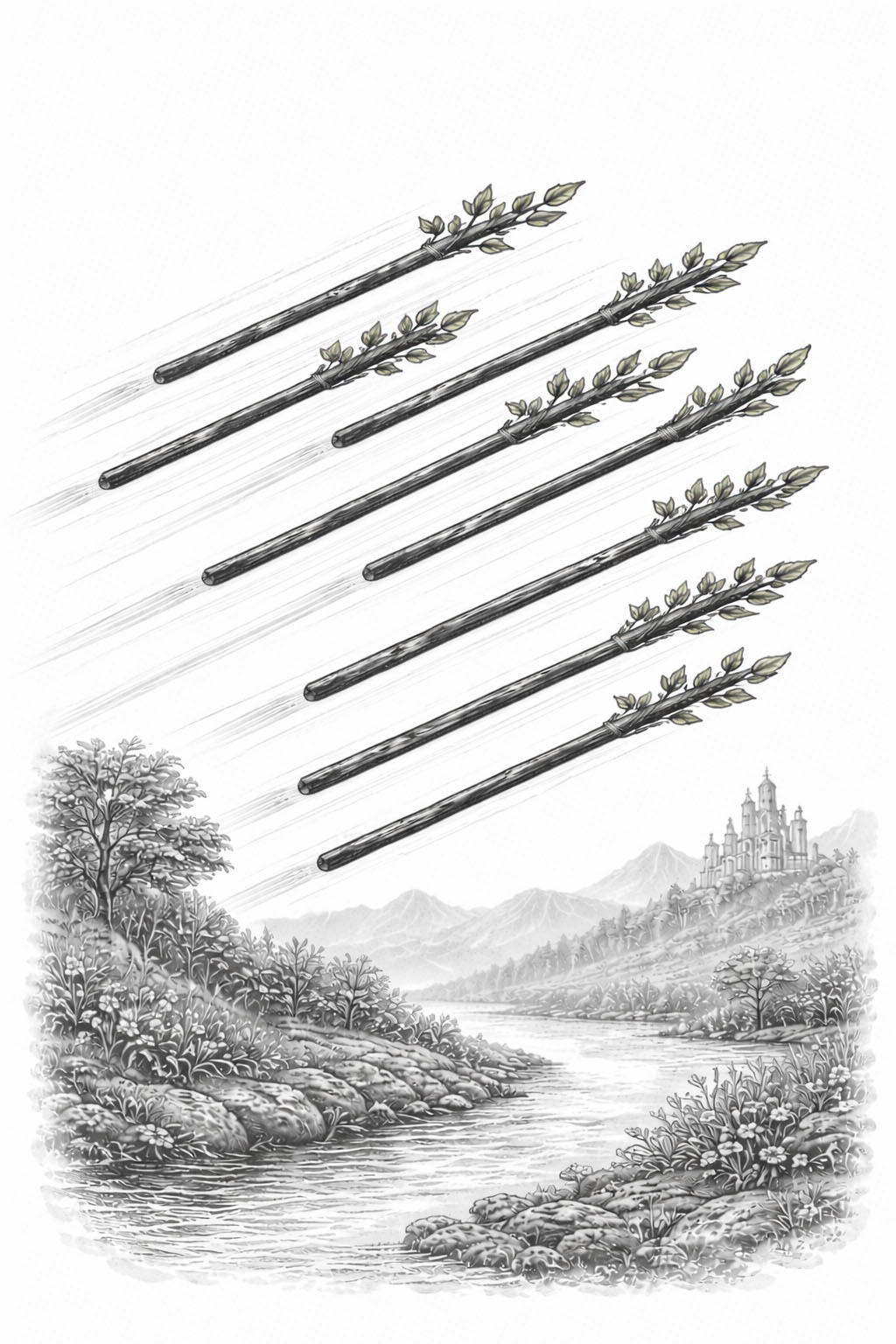
Context
meaning.love
The Eight of Wands in a love context is commonly read as a card of rapid movement and intensified communication. It represents momentum: conversations that pick up speed, decisions that come quickly, or a period in which emotional matters shift from stagnation to motion. In readings it often points to alignment between intent and action—energies that were building become focused and travel in a clear direction, which can mean clarifying feelings, arranging meetings, or an acceleration of commitment processes.
Interpreting this card benefits from attention to surrounding cards and the querent’s situation. When paired with cards that emphasize harmony, it can indicate a swift deepening of intimacy or quickly resolved misunderstandings. When surrounded by cautionary or restrictive imagery, the same swiftness can signal hasty choices, misdirected energy, or the need to manage impulse so that speed does not override consent, clarity, or long-term compatibility.
The Eight of Wands also has associations with distance and messages: letters, calls, or travel that bridge separation. In a reading focused on process, the card highlights timing and tempo rather than fixed outcomes; it prompts consideration of how easily the relationship’s current trajectory can be sustained and whether both people are moving at the same pace. As an educational touchstone, it encourages asking practical questions about communication patterns, logistical realities, and the consequences of accelerating events in the relationship.
meaning.job
In a career context, the Eight of Wands describes a period of accelerated activity and rapid movement following earlier planning and groundwork. It points to a cluster of events, communications, or opportunities arriving in quick succession that require prompt attention and efficient handling. The card emphasizes momentum: projects that have been stalled can suddenly advance, decisions that were deferred may need timely responses, and external contacts or proposals can change the pace of work.
Analytically, this card highlights processes and systems more than personality. It signals the importance of clear communication, robust logistics, and disciplined follow-through so that increased volume or speed does not degrade quality. Managing timelines, documenting expectations, and coordinating team roles become priorities; without those, the same energetic push that creates progress can produce miscommunication, overcommitment, or operational bottlenecks.
The Eight of Wands also invites assessment of alignment: rapid progress is valuable only if it fits strategic goals and capacity. Practical considerations include prioritizing tasks, delegating where appropriate, confirming details in writing, and keeping contingency options ready. When interpreted as a caution, it can denote the need to slow down just enough to ensure accuracy and sustainability rather than trying to do everything at once.
Viewed educationally, the card maps onto organizational dynamics—surge of activity, tight timelines, concentrated communication flow—and points to managerial and interpersonal competencies that turn momentum into constructive, lasting career development.
meaning.finance
In a financial context, the Eight of Wands is primarily about speed and movement rather than long-term structure. It typically points to a phase in which transactions, communications, or decisions accelerate: payments clear, deals or approvals move through quickly, a financial process that was stalled gains momentum, or market activity becomes brisk. The card highlights the short-term dynamics of cash flow and logistics rather than underlying solvency or strategy.
Interpreting this card involves attention to timing and readiness. Because events can unfold rapidly, systems and documentation need to be in place to handle incoming changes efficiently—contracts, receipts, reconciliations and clear lines of communication become important so that rapid developments do not create errors. The card can also relate to external triggers such as quick responses from partners, sudden customer demand, or expedited shipping and delivery concerns; in global or online commerce it can indicate transactions that cross borders or time zones more swiftly than usual.
As an analytical cue, the Eight of Wands suggests assessing capacity to act under time pressure, verifying details before committing, and preparing contingencies for increased volume or accelerated timelines. When energy is channeled well, the card points to productive forward motion; when not, it can reflect hasty decisions, miscommunications, or logistical bottlenecks that arise from moving too quickly.
meaning.family
The Eight of Wands in a family context points to a period of accelerated activity and movement. Symbolically associated with swift communication and events arriving in rapid succession, it describes a household dynamic where plans, messages, or changes that were previously stalled now begin to unfold quickly. The emphasis is on momentum: things that have been set in motion proceed with unusual speed and there is little time for prolonged deliberation.
In practical terms this can show up as a flurry of messages and calls about family logistics, unexpected visits or departures, short-term travel, or a series of decisions that need quick coordination. It can also mark a phase when long-awaited resolutions finally materialize and require prompt implementation. Emotionally, the atmosphere may feel charged and urgent; excitement and relief can coexist with stress from the compressed timeframe.
When interpreting this card for family matters it is useful to attend to how that speed is functioning: whether it is constructive, providing needed impetus to complete tasks and connect people, or whether it creates a sense of being rushed, leads to overlooked details, or amplifies miscommunication. The card points to the importance of clear, direct communication and practical coordination. Naming priorities, confirming arrangements, and assigning responsibilities can help convert energetic momentum into effective outcomes.
Conversely, the same energy can escalate tensions if reactions are impulsive or if decisions are made without considering consequences. Slowing down selectively—pausing before committing to major changes, double-checking arrangements, or clarifying intentions—helps preserve the benefits of movement without sacrificing thoughtfulness. In a reading, consider how surrounding cards describe timing, the quality of information flow, and the balance between urgency and deliberation.
meaning.mind
The Eight of Wands as a description of psychological state points to acceleration: thoughts, perceptions and impulses move quickly and in succession. Mental processing is rapid, connections form fast and decisions may come easily because incoming information lines up and seems to make sense. This can feel energizing and clarifying, a period when understanding consolidates and momentum builds around intentions or projects.
At the same time the card names a particular quality of speed that can produce tension. When the mind is moving too fast there is a risk of superficial conclusions, impatience, or an inability to sit with ambiguity. Emotions can be amplified by that velocity, producing restlessness, scattered attention, or a tendency to act before full consideration. Communication often feels urgent: you may want to convey ideas quickly or expect quick replies from others, which can create pressure in interpersonal contexts.
Analytically, this state is neither inherently positive nor negative; it is characterized by kinetic clarity rather than slow deliberation. It favors tasks that benefit from rapid synthesis and follow-through, but it can undermine careful reflection and long-term perspective if unchecked. Noticing the pace of thought and how it affects judgment—whether it sharpens focus or erodes nuance—is the useful psychological takeaway.
Practically, methods to engage with this condition include techniques to harness the velocity without being swept by it: create short, focused time windows to channel energy productively; externalize ideas through notes or diagrams to reduce cognitive overload; and use brief grounding practices to counteract impulsivity when careful evaluation is needed. Observing where speed helps and where it hinders provides a more conscious way to benefit from the card’s characteristic momentum.
meaning.soul
In the context of inner state, the Eight of Wands describes a mind in motion. Thought processes are accelerated: connections form quickly, conclusions arrive fast, and there is a strong sense of momentum. This can feel energizing and clarifying—ideas come into focus and a path forward seems obvious—yet it can also produce impatience and a tendency to jump before checking details.
Emotionally, the card points to heightened activity rather than deep stillness. There may be eagerness, anticipation, and a brisk readiness to move on from a stalled place. At the same time, the speed of mental and emotional shifts can leave one feeling scattered or unable to linger with nuance. Reaction times are shortened, and communications—internal or external—may be direct and immediate.
In a balanced expression, this state brings productivity, decisive thinking, and the ability to capitalize on emerging opportunities. In its more challenging aspects it can foster haste, missed information, or overwhelm from too much incoming stimulus. Awareness of that tempo helps: slowing down selectively, pausing to verify assumptions, and channeling the energy into focused tasks can preserve the card’s usefulness while reducing its impulsive edge.
Viewed educationally, the Eight of Wands highlights how tempo shapes experience. It encourages noticing when quickness serves clarity and when it sacrifices accuracy, and suggests cultivating simple practices—breath, brief pauses before responding, prioritization of next steps—to harness momentum without losing perspective.