Context
meaning.love
The Five of Wands in a love reading highlights tension in the realm of desire, identity and interaction. Wands govern drive, attraction and the active parts of a relationship; the number five introduces friction, testing and a need to adapt. Rather than pointing to fate or an unavoidable outcome, this card describes a particular quality of energy present in the romantic sector: scattered impulses, competing agendas, or lively disagreement that interrupts harmony.
In a partnership context, the card often indicates conflict that stems from differences in priorities, communication styles, or approaches to problems. These clashes can be surface-level—misunderstandings, raised voices, rivalry over attention—or deeper, expressing competition around independence, career goals, social life or creative expression. The Five of Wands does not inherently mean a relationship is doomed; it more usefully signals an environment where boundaries, roles and mutual respect are being negotiated under pressure.
For someone who is single, the card tends to describe an active, crowded dating landscape or internal conflict about what one wants. It can appear when there are multiple options or opinions to navigate, when flirting feels competitive or performative, or when personal doubts and desires pull in different directions. This energy can stimulate growth if managed thoughtfully, but it can also lead to confusion or burnout if left unexamined.
Viewed constructively, the Five of Wands can be a catalyst for clarity. Conflicts that are handled with attention can reveal unmet needs, insecure patterns, or areas where healthier negotiation is required. The card invites examination of how arguments start, who speaks and who is heard, and whether disagreement is a means of connection or a power struggle. Productive responses include clarifying intentions, setting fair boundaries, listening actively, and creating space for each person’s aims without immediately defaulting to defensiveness.
Ultimately, the Five of Wands in love describes
meaning.job
In a career context, the Five of Wands describes a situation of active disagreement, competing agendas, or friction among colleagues rather than calm, settled progress. It characterizes environments where multiple people push for different priorities, where roles overlap and communication is uneven, and where energy is high but not always directed productively. This card highlights conflict that is often situational and functional—debate, rivalry, or procedural clashes—rather than deep personal animosity.
Analytically, the Five of Wands signals that the workplace is testing coordination, decision-making and conflict-management skills. It can expose unclear responsibilities, resource scarcity, or divergent approaches to problem-solving. Viewed constructively, these stresses can sharpen ideas, reveal weaknesses in process, and surface leadership opportunities; left unmanaged they can produce inefficiency, frustration or reputational risk.
Interpreting this card in a professional reading focuses attention on the dynamics at play: who holds competing priorities, what systems permit overlap, and how communication channels and incentives shape behavior. Effective responses tend to involve clarifying goals and roles, improving information flow, and choosing where to apply effort rather than attempting to eliminate all disagreement. The Five of Wands therefore reads as an indicator of lively, sometimes chaotic professional interaction that calls for strategic coordination and skilled negotiation rather than passive endurance.
meaning.finance
In a financial context, the Five of Wands represents competing pressures, fragmented attention, and transactional friction rather than a settled condition. It signals a situation where multiple parties, priorities or projects are vying for limited funds or attention: budget lines clash, teams argue over resource allocation, offers compete for the same investment, or short-term market volatility creates noise. Energy is dispersed and communications can be tense, increasing the risk of inefficiency, overlooked details, and small disputes that erode margins.
Analytically, the card highlights the need to map competing claims, identify which conflicts are structural versus temporary, and apply practical coordination mechanisms. Clarifying priorities, tightening contracts and documentation, setting clear decision criteria, and establishing simple escalation paths can reduce transactional loss. Where competition exists, reframing it as market feedback can guide differentiation and cost-benefit assessment. In negotiations or partnerships, independent mediation or objective metrics may defuse personality-driven friction.
The Five of Wands is less about catastrophe than the work of reordering processes and communication so that limited financial resources are used coherently. It points to opportunities for restructuring responsibilities, streamlining budgets, and reinforcing accountability to convert disruptive competition into constructive refinement.
meaning.family
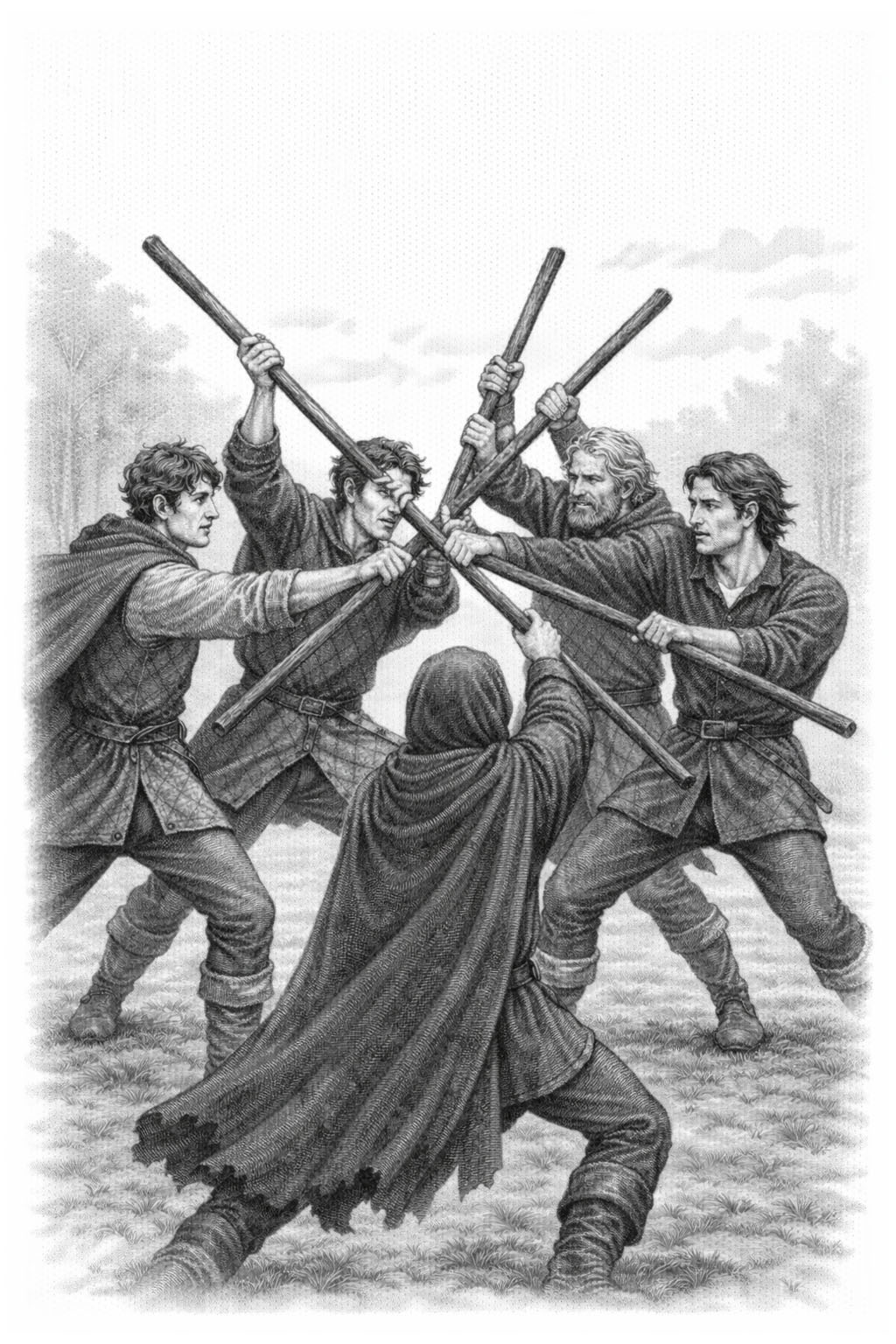
The Five of Wands represents energetic friction, competing agendas and a noisy clash of perspectives. It typically points to situations where multiple people push to be heard, where tasks and responsibilities overlap, and where the process of interacting generates tension more from misalignment than from malice. The image is of active, scattered energy rather than a calculated or enduring conflict.
In a family context this card often signals moments of rivalry, petty arguments, or logistical confusion: siblings competing for attention, partners debating priorities, relatives disagreeing about plans or standards. It can reflect different communication styles coming into contact, unclear roles around household duties, or transient disputes that arise when many voices try to shape a shared life.
Interpreted constructively, the Five of Wands highlights opportunities for growth through negotiation. The clashes it describes can reveal underlying needs, expose poorly defined boundaries, and prompt a reallocation of responsibilities. If addressed deliberately, the energy can be redirected toward clearer agreements, improved coordination, or collaborative projects that channel enthusiasm into common goals.
As an analytical lens, the card invites attention to how disagreements are managed: whether conflicts become entrenched or whether they are treated as temporary struggles to be resolved. Observing patterns of escalation, clarifying expectations, and creating structured ways to share decision-making can reduce chaotic friction; recognizing when competitive dynamics mask deeper concerns can point toward processes (dialogue, mediation, redefinition of roles) that restore functional balance.
meaning.mind
When the Five of Wands appears in the context of psychological state, it points to a period of tension and active internal conflict rather than calm integration. Mental energy is high and scattered, generating irritability, competitiveness, and a readiness to argue or push against others and circumstances. Thoughts may feel cluttered by multiple agendas or impulses, and there is often a sense of having to defend a position or prove oneself in relation to peers.
This card highlights dynamics of rivalry, performance, and boundary-testing that can be more about asserting identity than resolving underlying concerns. Pride, defensiveness, or insecurity can fuel confrontational behavior; alternatively, the agitation can be the psyche’s way of stimulating change or testing strengths. Creativity and initiative can be present, but they are expressed through friction and short-lived bursts rather than sustained focus.
From a psychological perspective the Five of Wands invites attention to the quality of one’s responses under provocation: is reactivity driven by unresolved fears, desire for recognition, or a habit of conflict? It also suggests the need to sort priorities and channel energetic tension into structured, constructive outlets so that competitive impulses become productive rather than purely disruptive. Practically, this may mean practicing clearer communication, developing tolerance for ambiguity, and learning to step back when arguments serve ego more than growth.
In therapeutic terms the image can flag an opportunity to explore patterns of rivalry, role-playing, and boundary-setting. Understanding the motives behind the clashes—whether defensive, aspirational, or performative—reduces their automatic power and opens pathways to more intentional expression of energy and ambition.
meaning.soul
Wands Five, read as a description of an inner state, points to active tension rather than calm or resolution. It often reflects a mind that feels challenged, restless, and engaged in a struggle — whether that struggle is with other people, competing impulses, or conflicting goals. Emotionally this can appear as irritability, a need to assert oneself, heightened competitiveness, or an uneasy excitement. Thoughts may be quick, fragmented, and focused on proving worth or defending a position, producing mental friction and difficulty finding a clear, steady direction.
From a psychological perspective the card maps onto states of arousal and conflict: cognitive dissonance, defensiveness, scattered attention, and the activation of fight-or-flight energy in non-life-threatening arenas such as workplace rivalry or internal debates. The friction is not purely negative; it functions as a stimulus that exposes weak points, sharpens skills, and forces choices. The challenge is that energy is often diffuse and reactive rather than strategically directed, which can prolong tension or escalate minor disagreements.
Understanding this state involves recognizing whether the friction is primarily productive testing or repetitive, ego-driven clash. Useful responses include pausing to identify priorities, deliberately channeling restless energy into focused practice or creative effort, and examining whether a system of communication or boundary-setting could reduce needless conflict. In short, Wands Five characterizes an activated, competitive inner climate that can catalyze growth if the intensity is harnessed, or produce burnout if it remains unfocused and combative.