Context
meaning.love
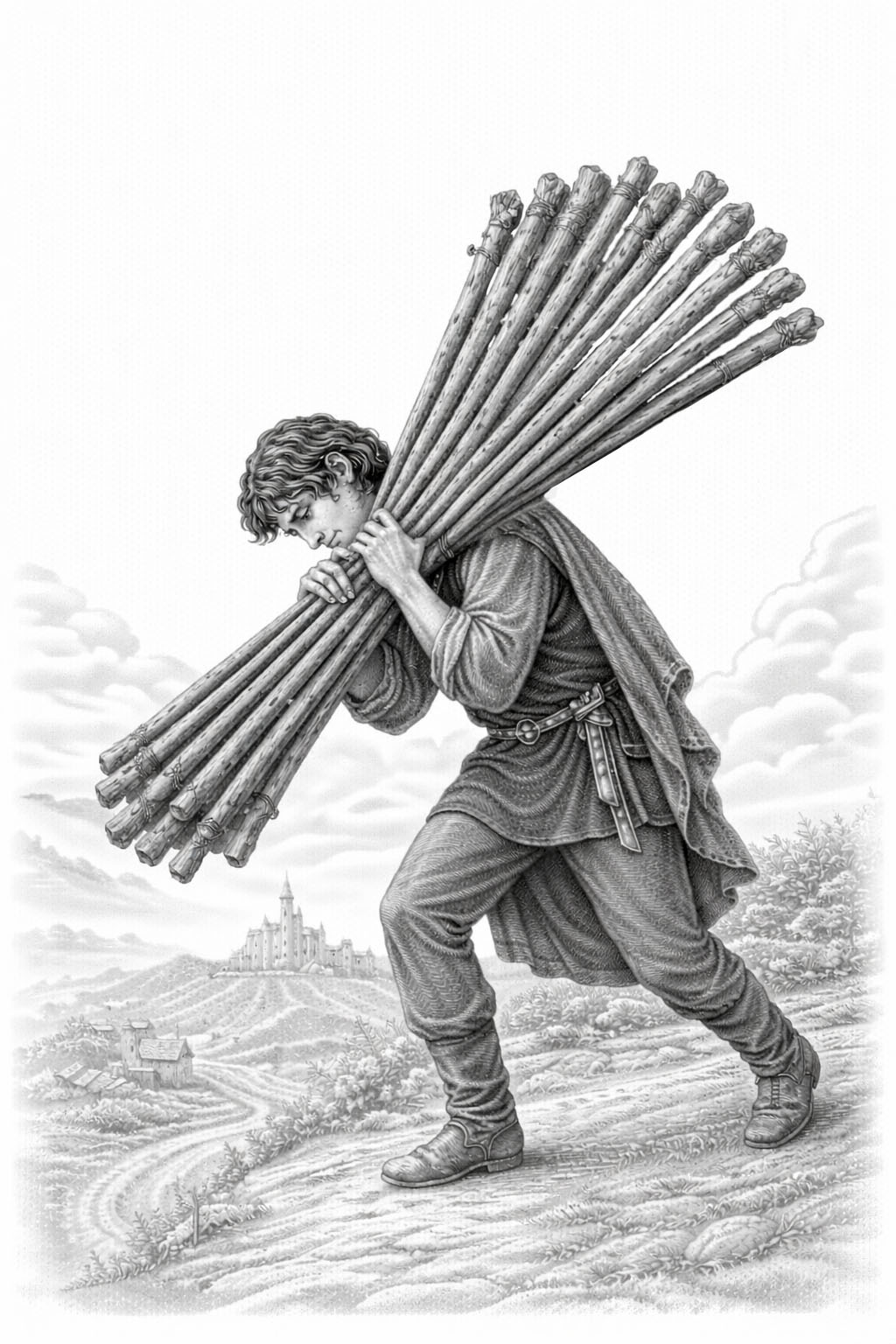
The Ten of Wands in a love context highlights issues of burden, responsibility and carrying more emotional or practical weight than is sustainable. It points to situations where one or both partners feel overwhelmed by obligations—household duties, childcare, financial pressures, caretaking, or the emotional labor of maintaining the relationship—and where the distribution of those demands is uneven. The card draws attention to accumulated commitments rather than fresh passion; stamina and perseverance are present, but they can come with fatigue and dwindling satisfaction.
Interpreting this card analytically involves distinguishing between chosen responsibility and imposed load. Accepting heavy duties as a deliberate, temporary contribution can be constructive; chronic martyrdom, guilt-driven caretaking, or reluctance to ask for help tends to erode intimacy and foster resentment. Communication about capacity, clearer boundaries, and practical renegotiation of roles are central themes: who carries what, why, and for how long.
For someone single or beginning to date, the Ten of Wands can signal the presence of unresolved baggage—expectations, past hurts, or practical constraints—that complicate new attachments. The card also represents a transitional moment: the end of a burdensome phase may be near, but relief typically requires conscious choices to delegate, release obligations that are not essential, or to restructure the relationship dynamics.
As an educational takeaway, the Ten of Wands encourages examination of sustainability. Mapping specific pressures, articulating needs without blame, and exploring realistic shifts in responsibility are practical steps for reducing strain. The card thus functions as a prompt to balance commitment with self-care so that the relationship can continue without one partner being consistently overextended.
meaning.job
Ten of Wands in a career context points to accumulated responsibilities and the pressure that comes from carrying a heavy load. It often appears when workload, commitments, or the expectations placed on a person have grown to the point of strain. The image of someone burdened with many wands is a useful metaphor for situations where capacity, time, or energy are stretched; the card highlights the structural and personal factors that create overload rather than offering a prediction about outcomes.
Analytically, the card signals a phase where persistence and follow-through are prominent features: projects may be near completion but still require significant effort to finalize. That endurance can be an asset—demonstrating reliability and the ability to see tasks through—but it also raises questions about sustainability and efficiency. Repeatedly carrying more than one can reasonably manage can degrade work quality, hamper creativity, and increase the likelihood of errors or burnout.
In organizational terms, Ten of Wands can point to unclear role boundaries, inadequate delegation, or a mismatch between responsibilities and resources. It may reflect taking on others' tasks to prove competence, reluctance to delegate for fear of losing control, or structural problems such as understaffing. The card invites examination of workflow, priority-setting, and the distribution of tasks across a team or reporting line.
From a practical, interpretive perspective, the card encourages assessment rather than immediate action: evaluate which duties are essential, where bottlenecks occur, and what can be redistributed or postponed without sacrificing long-term goals. Consider communication with supervisors and colleagues about scope and support, explore possibilities for delegating or automating routine work, and clarify objectives so effort aligns with strategic priorities. Equally important is recognizing the personal cost of sustained overload and factoring recovery and capacity-building into career planning.
Viewed neutrally
meaning.finance
The Ten of Wands in a financial context describes a situation where resources and responsibilities are concentrated and burdensome. It often points to an accumulation of obligations—multiple bills, projects, or investments that require ongoing attention—and the strain that comes from managing them all at once. This card highlights the difference between having many income streams or commitments and having the capacity to sustain them without excessive cost; the workload or expense associated with maintaining current arrangements can outweigh the benefits.
Analytically, the Ten of Wands encourages examination of where effort, time, and money are being expended and whether those allocations are efficient or sustainable. It suggests evaluating commitments for redundancy, negotiating or restructuring obligations to reduce pressure, and distinguishing between necessary expenditures and those that persist out of inertia. Practical responses consistent with this reading include consolidating debt or accounts where appropriate, streamlining business tasks or side projects, outsourcing or delegating functions that consume disproportionate time, and setting clearer boundaries around financial commitments.
This card also speaks to the lifecycle of a financial endeavor: projects close to completion can feel heavy because they require last-phase effort, and the end of a cycle may free up resources if managed deliberately. It is not inherently negative; heavy responsibility can accompany achievement, but the emphasis is on assessing sustainability and preventing burnout or unnecessary financial strain. The analytic takeaway is to map obligations, quantify their costs and benefits, and implement structural changes that reduce unnecessary load while preserving long-term financial health.
meaning.family
In a family context, the Ten of Wands represents a concentration of duties and expectations that has become heavy. It points to a situation where one or more family members carry a disproportionate share of practical responsibilities or emotional labor—managing finances, caregiving, household organization, or smoothing conflicts—so that daily life feels burdensome and energy is depleted. The image emphasizes effort and endurance rather than ease; tasks are being carried through, but at a cost to rest, leisure, and emotional bandwidth.
Interpreting this card analytically highlights patterns rather than fixed outcomes: who is taking on the load, why those responsibilities landed with them, and what social, cultural, or relational expectations support that distribution. It invites examination of the sustainability of current arrangements, the potential for burnout, and the presence of unmet needs or resentment under the surface. It also suggests that the situation may be close to a turning point, because such intensity often cannot be maintained indefinitely.
Educationally useful responses include exploring practical adjustments and boundary strategies. Assessing and prioritizing tasks, opening conversations about sharing or redistributing duties, inviting outside assistance when needed, and creating clearer role agreements can reduce strain. Attending to self-care and restoring small sources of replenishment helps prevent depletion. The card can also be read as reflecting commitment and reliability—the family member who carries this load may be motivated by duty or love—so any changes should acknowledge that intention while seeking fairer, more sustainable arrangements.
meaning.mind
Wands Ten, in the context of psychological state, describes a mind that is taxed by responsibility and obligation. It signals a pattern of carrying more than one can comfortably manage: mental load is high, attention is divided across too many tasks, and there is a persistent sense of pressure. Cognitively this can show up as diminished working memory, difficulty prioritizing, rumination about unfinished duties, and an increased susceptibility to irritability or low patience. Emotionally there may be fatigue, a creeping resentment toward obligations, or a flattened sense of enjoyment because energy is consumed by upkeep rather than creative engagement.
This card also highlights the role of self-imposed expectations and perfectionism. The burdens may be real, but they are often compounded by internalized standards and an unwillingness to delegate or let go. That combination narrows perspective: problem-solving becomes focused on pushing harder rather than reassessing goals or methods, which can prolong stress and impede adaptive change.
From an educational, psychological viewpoint, Wands Ten invites appraisal of load and limits. Recognizing patterns of overcommitment, distinguishing essential from optional responsibilities, and attending to restorative needs are common themes associated with this state. It is neither solely negative nor purely pathological; it reflects capacity and dedication alongside an unsustainable distribution of effort. Understanding these dynamics can clarify where relief or restructuring of responsibilities might most effectively restore balance and preserve psychological resilience.
meaning.soul
Wands Ten (Ten of Wands) as a description of душевное состояние points to a sense of being overburdened and mentally fatigued. Emotionally, the image suggests carrying heavy responsibilities or expectations that weigh on motivation and clarity. There is a mix of determination and strain: the individual keeps pushing forward because of duty, obligation, or a commitment already undertaken, but the energy to sustain that push is diminished and concentration can become clouded by exhaustion.
This state often arises from an accumulation of tasks, unresolved duties, or internalized standards that are difficult to release. It can reflect perfectionism, guilt about letting others down, or taking on more than one can practically manage. The psychological tone is one of tension between perseverance and depletion — an awareness that progress is being made alongside a clear need for relief.
From an educational perspective, recognizing this card in an emotional reading invites assessment of what is genuinely necessary and what is optional. Attention to boundary-setting, redistribution of responsibilities, and realistic pacing are relevant ways of addressing the pattern the card describes. The emphasis is on understanding how burdens affect mental resources and on exploring adjustments that reduce strain while preserving what is important.